Evidence Lab v1.1.0
Evidence Lab v1.1.0 brings a full user authentication and permissions system, an experimental research assistant with deep research mode, a guided interactive demo, in-system documentation, and some security hardening.
Page 3 of 5. Back to the newest.
Evidence Lab v1.1.0 brings a full user authentication and permissions system, an experimental research assistant with deep research mode, a guided interactive demo, in-system documentation, and some security hardening.
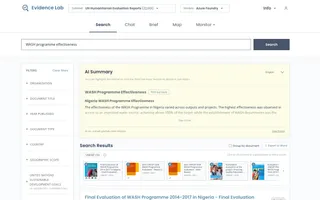
Evidence Lab is a free open source platform that provides a document pipeline, search, and AI-powered information discovery and evidence mining tools. Point it at a folder of PDFs, configure via a single config.json, and get a fully searchable, AI-enriched document collection.
Evidence Lab is a free, open-source platform that provides a document-processing pipeline, search, and AI-powered information-discovery tools. The aim is to provide a quick, cost-effective way to get your documents processed and searchable…
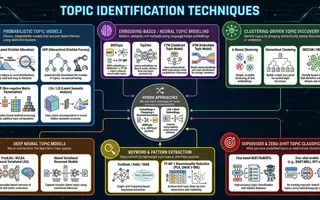
In this article, we explore using a new algorithm called TaxoAdapt for automatically creating new taxonomies from documents. TaxoAdapt is interesting in that it provides a way to guide the generated categories and taxonomy structure, while…
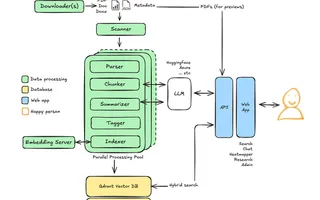
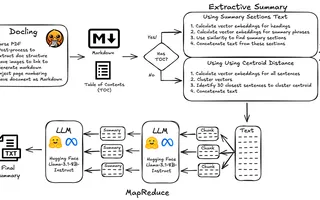
In this article, we explore how to process United Nations humanitarian evaluation reports, using AI to generate document summaries. These summaries are key to presenting reports on websites, as well as being an important component in…
Using AI, we develop a new Model Context Protocol (MCP) server for the Humanitarian Data Exchange (HDX) API. We’ll demonstrate how it can be used in AI clients like Claude desktop to answer basic analytical questions related to…

AI is now a big part of software development because of tools like GitHub Copilot offering auto-complete features for writing code. More recently, this has extended beyond modifying existing code and creating short snippets, towards…

AI assisted research using FEMA disaster response documents
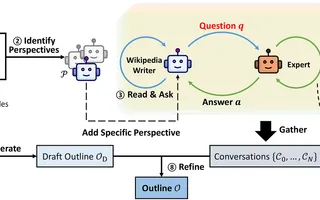
In the humanitarian response world there can be tens of thousands of tabular (CSV and Excel) datasets, many of which contain critical information for helping save lives.

There are lots of tutorials on using powerful Large Language Models (LLMs) for knowledge retrieval. However, if considering real-world application of these techniques, engineering best practices need to be applied and these should be…