Evidence Lab
A free, open-source platform for searching and researching large document libraries with AI.
Try evidencelab.ai (opens in a new tab)Code on GitHub (opens in a new tab)Watch the overview (opens in a new tab)
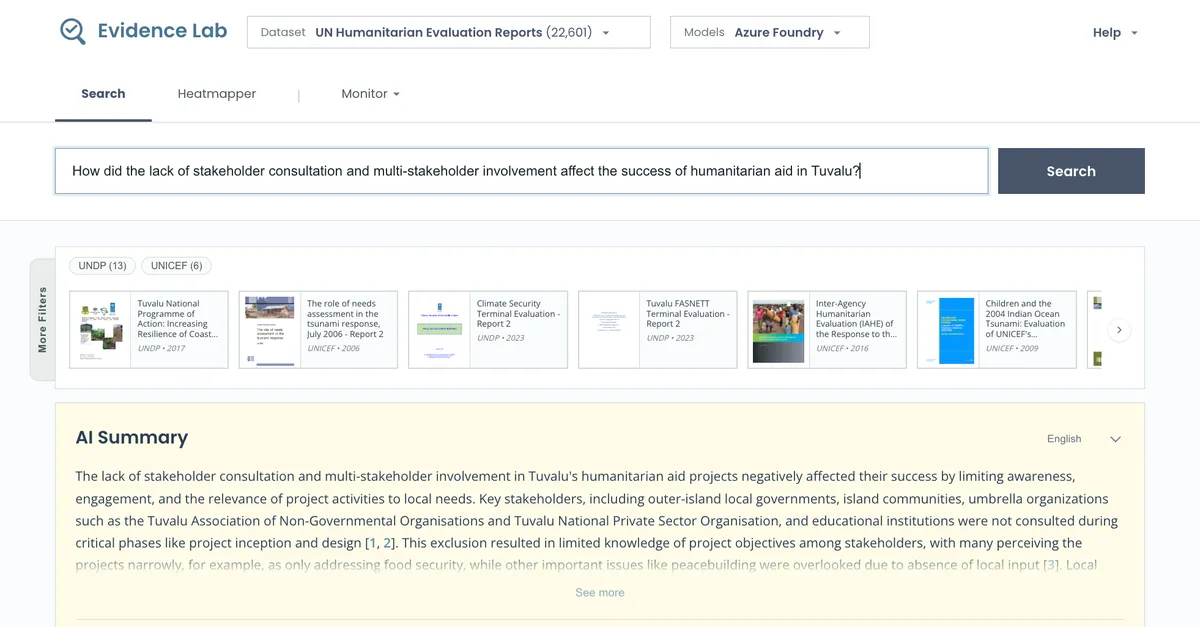
Evidence Lab is a free, open-source platform for working with large collections of documents using AI. It turns a folder of PDF and Word files into a searchable library, then adds tools for asking questions of it and writing evidence-backed briefs.
The online version (opens in a new tab) holds about 20,000 United Nations humanitarian evaluation reports from the United Nations Evaluation Group (opens in a new tab). Evidence Lab is being deployed by various teams, including at the United Nations, and you can run it yourself on your own documents.
Key features
Research Assistant
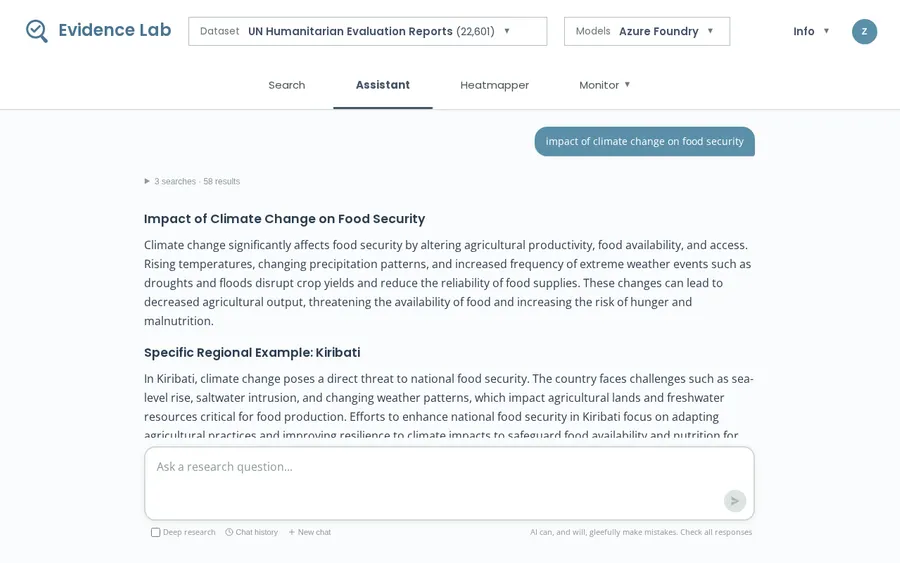
Ask a question in plain language. The assistant searches the library and writes an answer with inline citations, and you can keep the conversation going. Deep Research mode takes longer for a more thorough investigation.
Brief
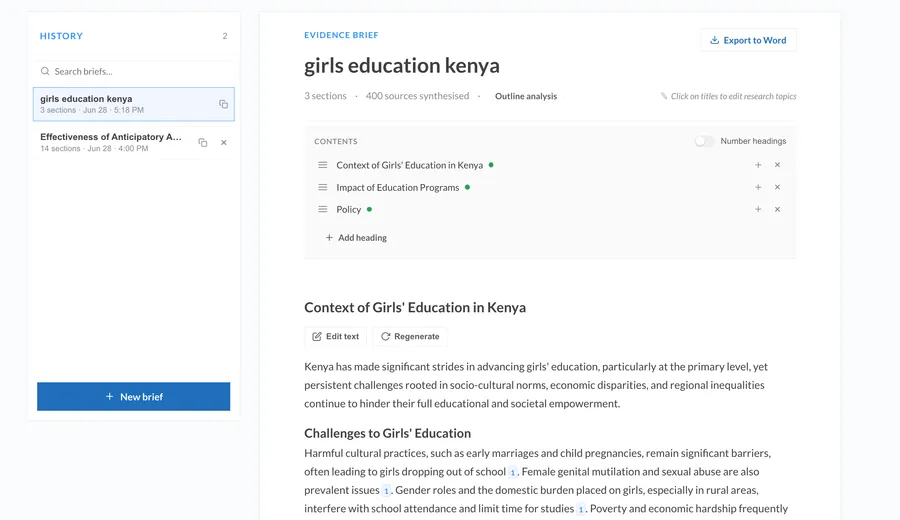
Turn a topic into a structured, evidence-backed brief. Evidence Lab suggests an outline from the library, researches each heading into cited text, and exports a Word document with citations linked to the source documents.
Heatmapper
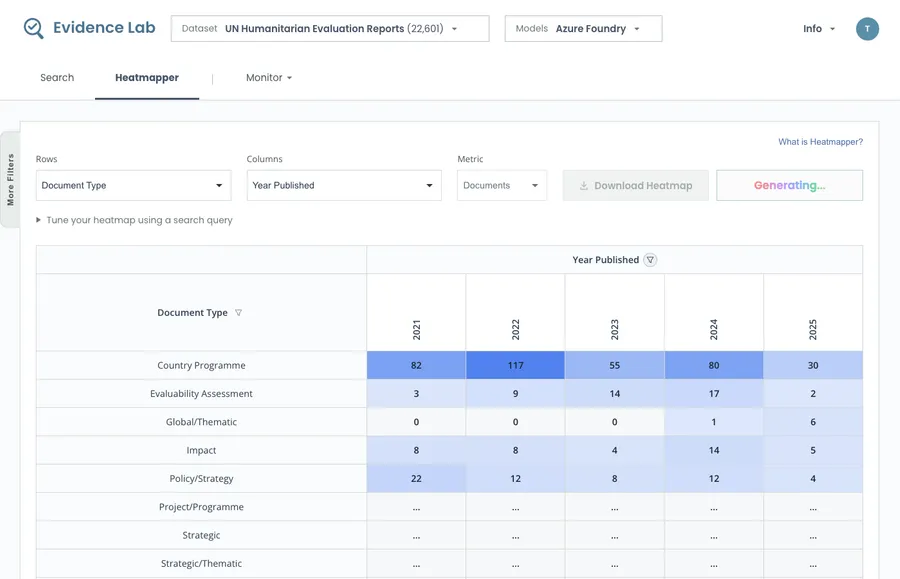
An experimental view for spotting trends. Count documents by any two fields, such as type and year, and narrow the counts with a search.
Document pipeline
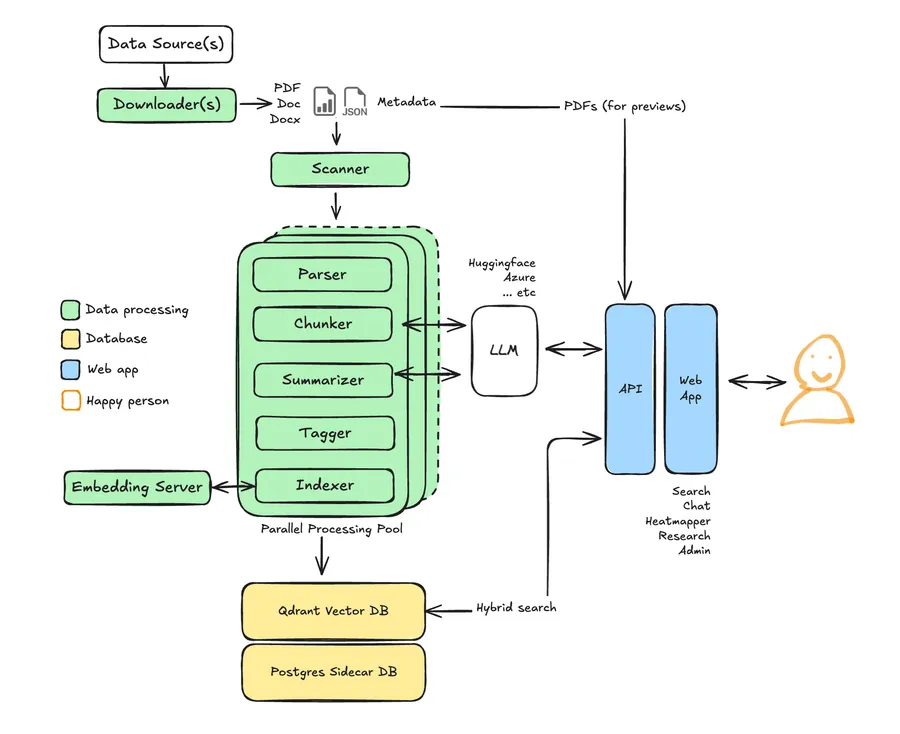
Point it at a folder of PDF and Word files. It reads their structure, tables and images, summarizes and tags each document with AI, and indexes everything for search. It runs on a desktop, processing 20,000 30-page documents in a week on an Apple M4 Pro mini for less than $50.
And more
Hybrid search
Semantic and keyword search with AI summaries, reranking, filters, highlights and a PDF preview.
Works with AI assistants
An MCP server lets Claude, ChatGPT and other assistants search the library. An A2A agent and a REST API serve other tools.
Built-in evaluation
Test search and AI summary quality against the live system, and check a brief's citations against their sources.
Any model
Open models from Hugging Face or hosted ones on Azure, Google Vertex and Amazon Bedrock.
See it in action
 (opens in a new tab)