Protecting Your Organization for Life Without AI
A few simple things you can do now, just in case big AI goes away.
TL;DR
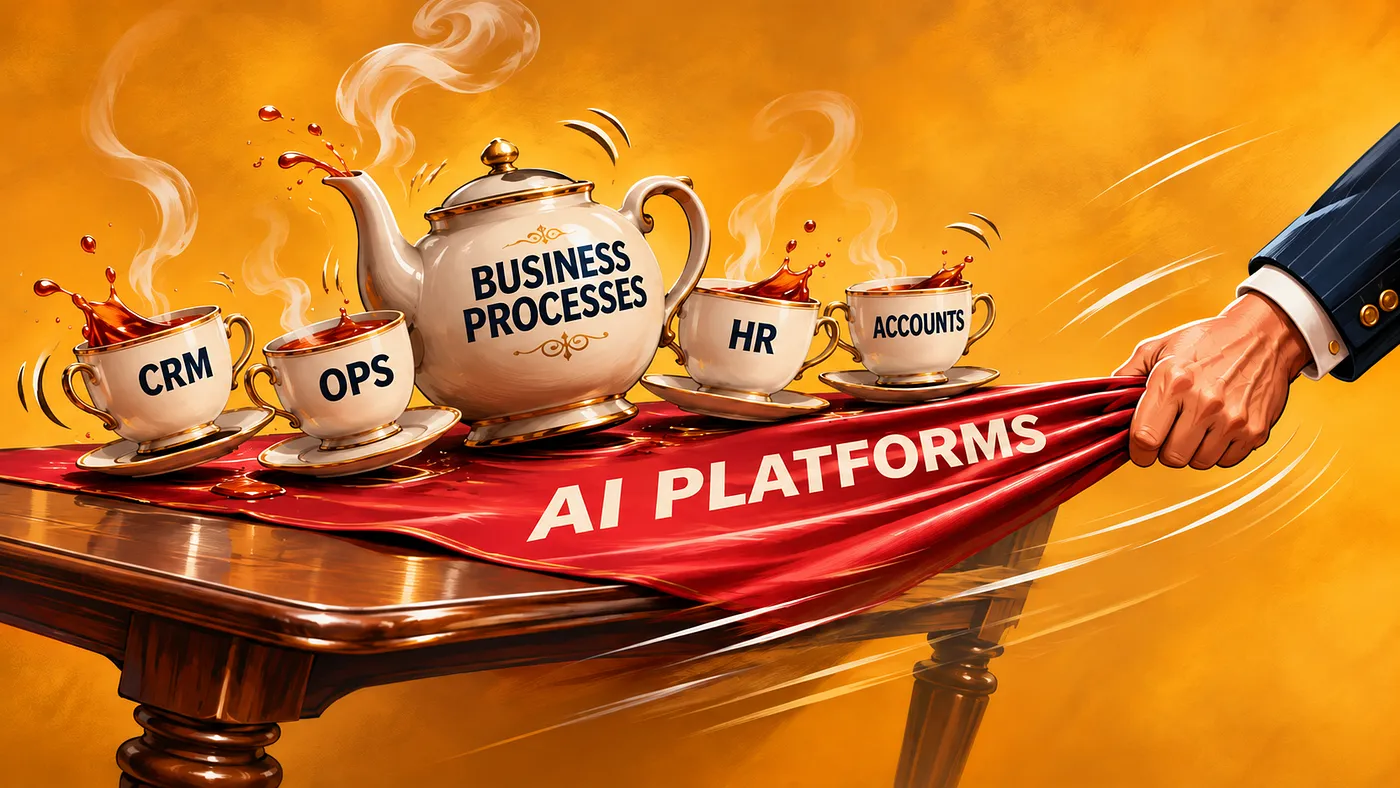
AI has become genuinely amazing at running a small organization’s workflows. But there’s a real chance some big AI platforms will get much more expensive, or their companies will vanish. This article covers six steps to help protect against these scenarios where the AI platform is no longer available. They include making the AI the operator of existing systems rather than the only system, maintaining in-house human expertise as best as possible, and backing up your skills by documenting processes. As a bonus, these same steps make it much easier to switch AI provider, whether for cost, capability, or policy reasons.
The dream finally works
This year, AI has become super useful for automating business operations. Claude Code, Claude Cowork, scheduled jobs, integration with email, meetings, and more … it’s been amazing to finally automate the things I’ve dreamed of automating for years.
That might be a daily briefing before you start work, which checks your email and gives you a task list. Or working out which support items and development tasks need attention that day. Or outreach to prospective customers and funders. These information-heavy tasks are exactly where AI shines, to the point where it quickly becomes indispensable, especially if you’re a small organization without the staff to do it all.
Way more time to get back to surfing the internet to look at pictures of puppies!
Ah, but what if it all goes away?
This isn’t me being pessimistic (well, maybe a little). There are a couple of very real threats …
Threat 1: Major AI platforms become too expensive
AI is heavily subsidized right now. Many of us are getting far more compute than we pay for. A recent SemiAnalysis report estimates that subscriptions make up just 10% of Anthropic’s revenue but can take up over 40% of its inference compute, and that a $200 plan can return thousands of dollars of API-equivalent usage (SemiAnalysis). Light users are mostly profitable, so the subsidy mainly benefits heavy automators leaning into AI. The costs behind this are real: Anthropic’s updated IPO filing shows operating expenses jumping from $10.6 billion to $17.5 billion in a single quarter, tipping it into an operating loss (Fortune). For now, competition is actually pushing prices down, and cheaper microchips may help too. But as the big AI companies go public, shareholder pressure may push prices up to reflect true costs, and if these subsidies vanish quickly and prices spike, many organizations may not be able to keep going.
Threat 2: The AI market may undergo severe adjustment
Revenues are growing fast, but many of these companies’ profits are thin and uneven, and the spending commitments are enormous. They’re all racing for market share, and the funding is, shall we say, somewhat circular (Bloomberg). If some shock causes a big market correction, vendors could go under, and you might wake up to find you have no vendor at all.
If you’re a small, AI-first organization that has invested a lot of effort into automating workflows, that’s a really big problem. You could be left hanging.
So, what can we do about it?
Six simple steps for contingency
1. Make AI the operator, not the platform
It’s very alluring to let your AI platform hold everything: meeting notes, triaged emails, dashboards, data processing. It works fantastically … right up until that platform goes away.
Instead, use AI to operate the tools dedicated to these tasks. We now have great MCP servers that let platforms like ChatGPT and Claude talk with other systems and software, so this is getting a lot easier. Also, AI computer use, if you’re ok letting AI have access to your computer, opens the way for these platforms to use software. AI platforms can now do things like data pipelines and image processing natively, but in the short to medium term it’s safer to have AI drive the dedicated tools you already use.
AI goes away, you can still do the thing.
2. Keep your data in systems with a real user interface
Have the AI write its data somewhere you own. A database works, but it can be a bit technical for most staff. Platforms like monday.com and Jira are great at storing relational data, come with a proper user interface, and often have free tiers.
The classic example is a sales pipeline in a Customer Relationship Management (CRM) system. The AI logs new leads, updates deal stages, and drafts follow-ups, but the pipeline lives in the CRM, which people already know how to run by hand. Volunteer or event sign-ups work the same way: the AI tidies each one into a row on a board, but if it disappears, you still have your data and a way to manage it.
3. Capture your business rules in prompts you own
Keep your prompts, plugins, and skills as plain files outside the AI platform. This turns out to be more valuable than it sounds, because your prompts are your business rules: how a lead is qualified, when a follow-up is due, what counts as urgent. If the AI goes away, those files become a playbook a human can follow.
4. Run a “No AI Day”
OK, so this one is harder than it sounds, especially as we invest more in AI automation. But in the short to medium term at least, it makes sense every so often to switch the AI off and run a key process entirely by hand. Think of it as a fire drill. It proves your fallback actually works, and it surfaces the gaps before a real outage does. It also helps ensure at least one person understands each automated workflow well enough to do it themselves. Automation shouldn’t mean that nobody remembers how the work actually gets done.
At least not yet, until we have AGI overlords.
5. Keep a close eye on open models and platforms
At the time of writing, though open LLMs are close behind flagship models, the supporting systems like ChatGPT and Claude are way ahead. These platforms offer huge value in user experience. Enterprise permissions, sharing, scheduling, orchestration for coding agents, to name but a few. Yes, it’s possible to do all these things with open models and custom development, but it’s work. For this reason, most organizations are leaning toward these vendor products as more enterprise-ready. There are counterarguments, for sure, but it’s the reality for most organizations.
But it might not stay that way.
If you have technical capacity, keep an eye on developments with open models and platforms to see if anything is good enough to step in.
6. Rank your dependencies
Finally, list your AI automations and ask which ones would hurt most if they stopped tomorrow. Protect those first. You don’t need a fallback for everything, just for the things your organization can’t live without. This isn’t a new strategy, it’s good ol’ fashioned contingency management. In fact, your AI exposure should be added to existing contingency and disaster recovery programs.
Yes, there are trade-offs
None of this is free. It adds some setup work and usually another subscription, and some things really are better done natively inside the AI. The aim isn’t to make everything bulletproof, just the stuff that matters.
Also, let’s be realistic. As AI gets more and more advanced, some of these steps will get harder. Keeping humans in the loop on how the work gets done, or getting through a No AI Day, will be tougher when AI is doing things no person on the team could easily replicate. So this isn’t a forever solution. But at least in the short to medium term, while the threats above are very real, these seem like sensible, low-cost steps to take.
Wrapping up
I know this all sounds a bit doom and gloom, and hopefully things will never come to this. AI is genuinely transforming what small organizations can do, and I’m as excited about it as anyone. But having a good contingency plan is just good hygiene for business operations. With these steps in place, if your AI goes away tomorrow, you’ll lose some speed, not your operations.
If you’d like to chat about AI and operations, feel free to message me on LinkedIn.
Please follow me on Medium for more noodling about with AI. 🙂
Unless otherwise noted, all images are by the author.